Why your adjustment keeps undoing itself
Feeling good on the table and sore again two days later is a pattern, and patterns have causes.
September 17, 2026 · 3 min read
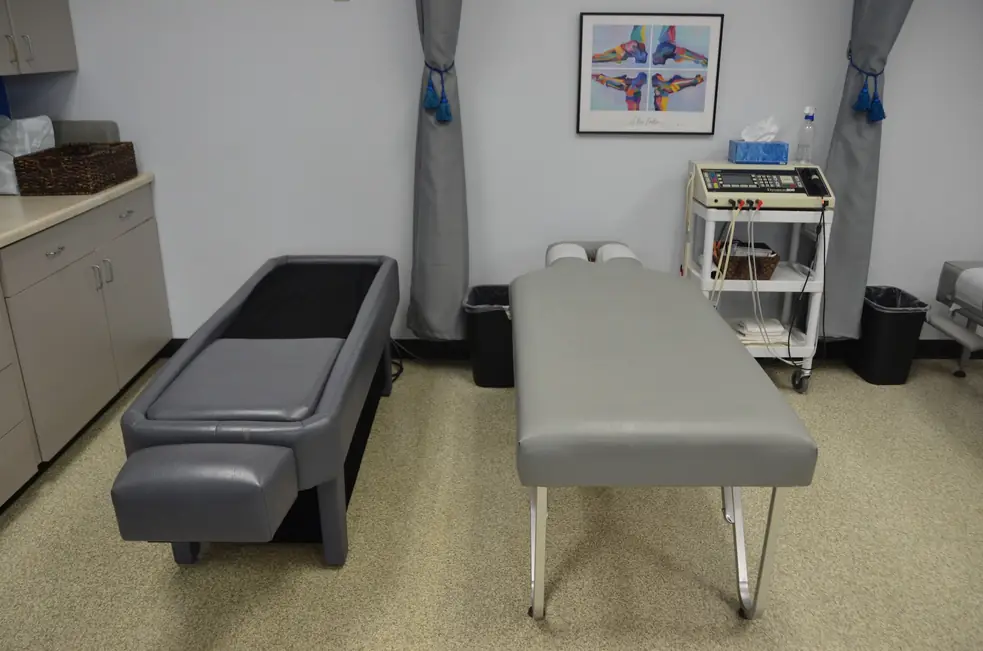
There is a version of chiropractic care that never quite finishes. You come in, you get adjusted, you walk out moving better than you have in weeks, and by Thursday it has crept back. So you book again. That cycle can go on for a long time before anybody stops to ask why the correction is not holding.
It is worth asking, because a correction that keeps reversing is telling you something specific. The joint is not failing. Something is pulling it back.
A joint does not move on its own
An adjustment restores movement to a segment that had stopped moving properly. That part is mechanical and it works. But the moment you stand up, that segment goes back to being governed by the muscle around it, and muscle has a memory measured in months, not minutes.
If the muscle on one side of a joint has been short and overworked for a year while the other side has gone quiet, it will win. Not immediately, and not dramatically, but reliably, over about forty eight hours. That is the Thursday feeling.
This is the single most common reason care stalls, and it is also the most fixable. It just is not fixed by more adjusting.
Three things that usually turn out to be the culprit
- A trigger point that has not released. This is a specific knot of contracted muscle, not general soreness, and stretching often fails on it because the rest of the muscle lengthens while the knot does not.
- Weakness on one side. Deep stabilising muscle goes quiet after injury or after a long period of guarding, and once it is quiet, the joint has to be held by something that was never designed to hold it.
- Inflammation that resets progress. When the tissue is still inflamed, everything around it stays protective, and a protective body will undo a correction as a matter of policy.
All three are treatable, and none of them is treated by repeating the adjustment more often. That is the point that tends to land with people who have been coming somewhere for months.
What changes when the muscle is dealt with
Dry needling reaches trigger points that pressure and stretching cannot. A thin sterile needle goes into the point itself, the muscle lets go, and the referral pattern it was driving usually goes with it. People are often surprised that the headache or the hip pain they had accepted as background noise disappears once the responsible knot is released.
Cupping works from the other direction. Instead of pressing down on tissue, it lifts it with suction, which decompresses the layers and draws circulation back into an area that had gone quiet. Chronic tension is nearly always poorly supplied tissue, and pressing harder on poorly supplied tissue mostly makes it guard.
Where inflammation is the obstacle, laser or Tecar therapy brings it down far enough that the rest of the work can hold. Laser puts light energy into the tissue to reduce inflammation and improve blood flow. Tecar uses radiofrequency to generate warmth at depth rather than on the skin, which matters when the injury is a long way below the surface.
Rehab is the part that makes it permanent
Releasing muscle and reducing inflammation buys a window. Rehab is what you do with the window. Targeted exercise rebuilds the control that went missing, so the joint stops depending on a fortnightly appointment to stay where it belongs.
This is unglamorous and it is usually the difference between finishing care and subscribing to it. It also tends to be quite specific work. General stretching is not the same as rebuilding a particular muscle that has stopped firing, and a lot of people have been given the first while needing the second.
What to ask at your next appointment
If you recognise the pattern in this article, the useful question is not whether to keep getting adjusted. It is what else is on the table. Ask what is pulling the correction back, whether it is a trigger point, weakness or inflammation, and what the plan is for that specific thing.
At Aascend Chiropractic the traction table, the laser, the needles and the rehab floor are all in the same building on North Westhill Boulevard, which means the answer to that question does not have to be a referral somewhere else. If your adjustments are not holding, call the office on (920) 574-3622 and say exactly that. It is a good place to start.
Aascend Chiropractic, (920) 574-3622
Call (920) 574-3622More articles
Sciatica in the Fox Valley: is it a disc, or is it muscle?
Two very different problems produce almost identical symptoms, and they need opposite treatment.
What actually happens at a first chiropractic appointment
Most of a first appointment is not adjusting. It is working out what is wrong.