The adjustment room
Chiropractic Care and Adjustments
Spinal alignment and joint mobility for back pain, neck pain, headaches and migraines, sciatica, shoulder, hip and knee pain, sports injuries, whiplash, muscle tension and postural problems.
Chapter 01
Why we examine before we adjust
The sore spot is usually not the whole story. A shoulder that will not settle can be coming from the neck, and a knee that aches on stairs can be a hip that stopped rotating months ago. So the first appointment is mostly listening and testing: what hurts, how long it has been going on, what makes it worse, and what you have already tried.
That is also why nothing gets adjusted on the strength of a description alone. Patients write about this in their reviews more than anything else, that the time goes into working out the cause rather than going straight to the part that hurts.
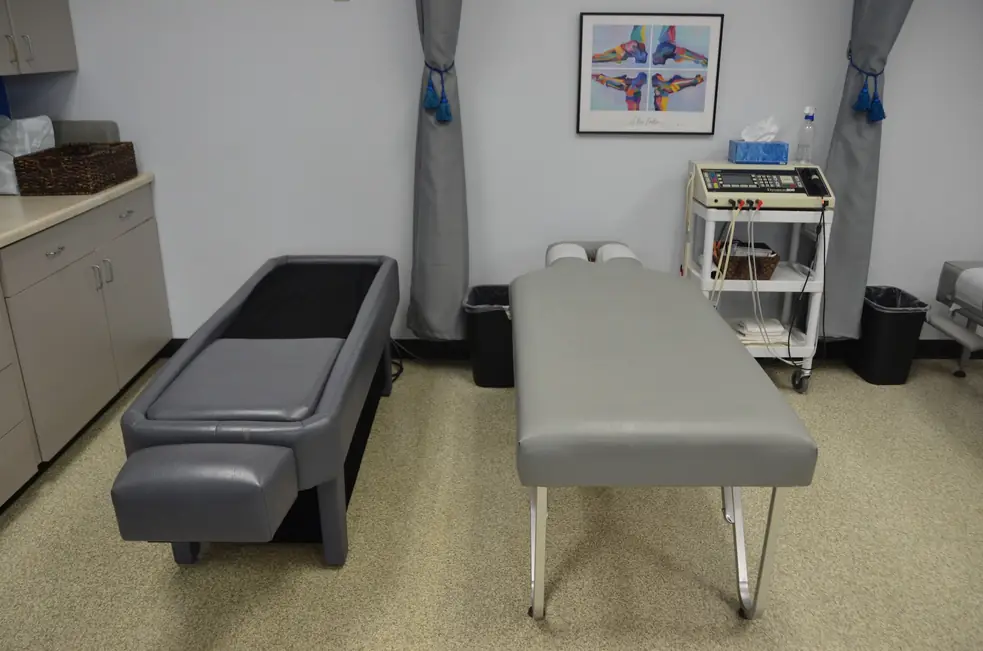
Treatment room at Aascend Chiropractic in Appleton, with two treatment tables, a Dynatron electrotherapy unit and framed anatomical prints
What an adjustment actually changes
An adjustment is a specific, controlled correction to a joint that has stopped moving the way it should. When a segment locks up, the joints either side take the extra load, the muscle around it tightens to protect it, and the whole area starts guarding. Restoring the movement takes that demand back off the neighbours.
It treats a wide range because the mechanism is the same in a lot of places: back and neck pain, headaches and migraines, sciatica, shoulder, hip and knee pain, sports injuries, whiplash, arm and leg pain, muscle tension and postural problems all show up on the table here.
Chapter 03
Holding the correction between visits
An adjustment that keeps undoing itself between appointments is usually a muscle and habit problem, not a joint problem. That is where the rest of the building comes in: rehab to rebuild what has gone weak, dry needling or cupping when the soft tissue will not release, laser or Tecar when inflammation keeps resetting the progress.
Patients also get sent home with something to do. The practice is known for offering resources and prevention rather than quick fixes, and that means part of the work happens away from the table.
Dr. Ben Reineking has been adjusting patients across the Fox Valley since 2009.